

Building Begawan Biji farm in Bayad, Bali
At the end of a quiet road just 20 minutes from Ubud
waits one of the most beautiful farms in Bali.
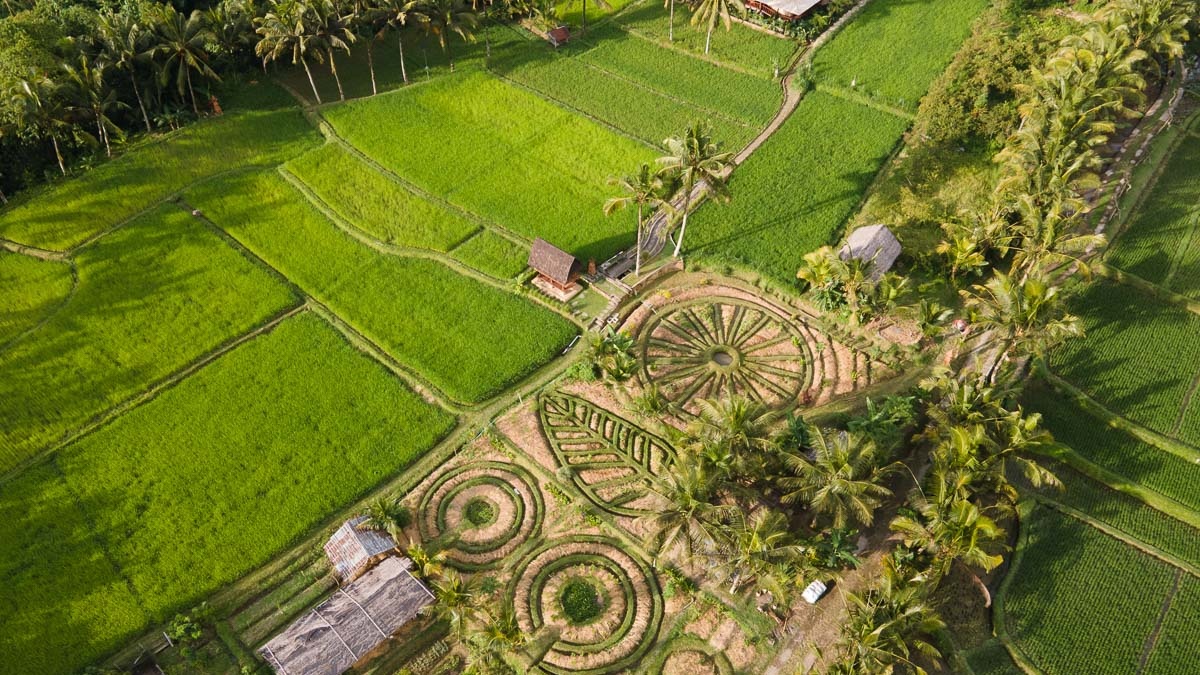
Part of the land is molded into mandala-shaped garden beds, fringed by edible flowers, mulberry trees, and sorghum. A traditional lumbung, or Balinese granary, stands proudly on wooden stilts. A long poultry house faces the regenerative farm beds, and neatly planted rice fields lead the eye towards rows of waving banana trees and coconut palms.
Begawan Giri began in 2022 (and has since, transitioned to Begawan Biji farm since 2026), with just one farmer on a 0.44-hectare plot of land in Bayad Village. Begawan, a foundation that’s led initiatives in conservation and education in Bali for more than 20 years, decided to explore solutions to Bali’s pressing agricultural concerns: environmental degradation, land loss, and low incomes for farmers.
Begawan launched its regenerative farming initiative with the goal to support local farmers to transition to chemical-free farming. To do this, the organisation provided training in regenerative practices, supplied materials such as organic seeds and natural fertilizers, and created a business model that guaranteed farmers higher profits from their harvests.
Begawan chose to plant Mansur, a brown rice that was one of many heritage varieties cultivated in Bali before the monoculture of hybrid rice begun during the Green Revolution. Seeds were purchased from an organic farmer in Tabanan, and 22 tonnes of compost were used to enrich the soil before the first planting season.
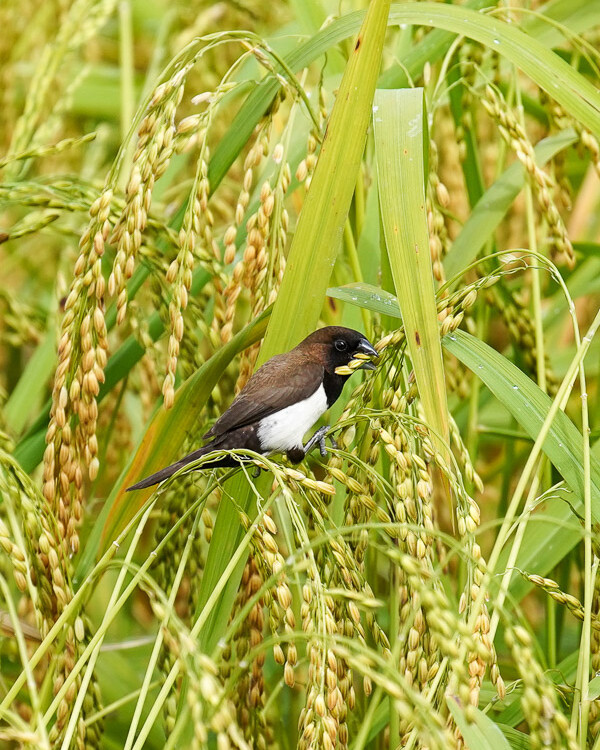
Aware of the high methane output and water consumption in conventional flooded fields, Begawan chose to use intermittent flooding for its rice paddies, significantly reducing water use as well as methane emissions. Dr. Stephen Lansing, an ecological anthropologist, studied the methane output of Begawan’s fields, and reported his findings at COP28 in Dubai in 2022.
Begawan’s founders reached out to hotels and resorts in Bali with news of the small farm growing a delicious, nutty wholegrain using only natural farming methods. After a four-and-a-half month growing cycle, 966 kilos of Mansur rice were harvested.
Several more farmers decided to join the program.
Later in 2022, Begawan hired a permaculturist to survey a .50-hectare plot to gauge its potential as a permaculture garden. The land was divided up with space for a plant nursery and composting house for rice straw from the fields. The garden beds were created in a Mandala-style circular design, with water in the central ring for irrigation and aquaculture.
In August of 2023, Begawan constructed an underground natural water filter, the largest of its kind in Bali. Measuring 20 metres long, 2.5 metres wide, and 1.5 metres deep, the filter used three tanks and a system of plants, volcanic rock, and gravel to purify the water from the public irrigation system of large particles and heavy chemicals.
Begawan consulted professionals about the building of a poultry house, and constructed spacious quarters to accommodate free-range ducks, ISA Browns known for their egg laying production and village kampong chickens. The organisation also built its own rice mill with a mechanical dryer and milling machinery, to process the Mansur rice in a chemical-free facility.
Today a number of farmers are growing Mansur Rice naturally on rice fields surrounding Begawan Biji. The farmers are trained in natural regenerative farming practices, and each farmer is guaranteed a premium price for the rice, well above market rates. Begawan also provides jobs to men and women from Melinggih Kelod, who help with labour on the farm.