

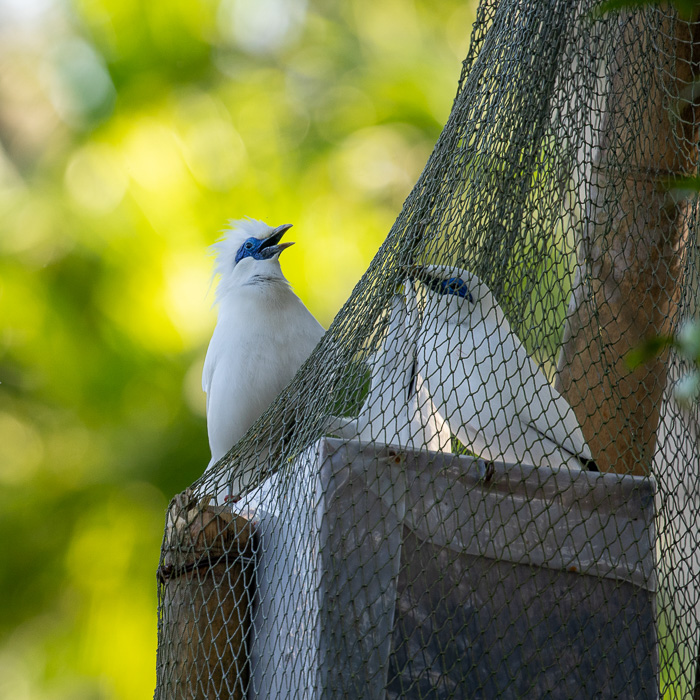
Saving the critically endangered Bali Starling through conservation

Saving the critically endangered Bali Starling through conservation
Every day without fail since the commencement of the breeding programme in 1999, the team at Begawan nurtured and reared a flock of critically endangered Bali Starlings in its breeding enclosures.
The Foundation led a pioneering conservation program aimed at restoring the population of Bali Starlings in the wild. The organisation’s work to save the Bali Starling was done not only within the breeding centre, but in local schools, government offices, wildlife parks, and rural villages on the island of Bali.
Inside the Breeding Centre
Begawan was one of the most meticulously designed breeding centres on the island., Located in the village of Melinggih Kelod from 1999 to 2004 and again from 2017, the enclosures were professionally designed by a veterinarian. Each enclosure was partially shaded to protect the birds from rain and sunlight and included food and water bowls, bathing stations, nest boxes, warming infrared lights, and perches. Many enclosures also featured trees and nesting plants to replicate the Bali Starling’s natural habitat.
Begawan’s captive flock was housed across three types of enclosures. Quarantine enclosures accommodated birds arriving from outside sources or requiring medical attention. After disease screening, these birds were introduced to the flock to strengthen breeding lines. Three Bali Starlings were imported from Wildlife Reserves in Singapore, and 20 from the European Zoo Association to pair with Begawan’s own flock and improve the bloodlines. Birds from Begawan’s fostering programme, raised by local community members, became part of the breeding and release programme.
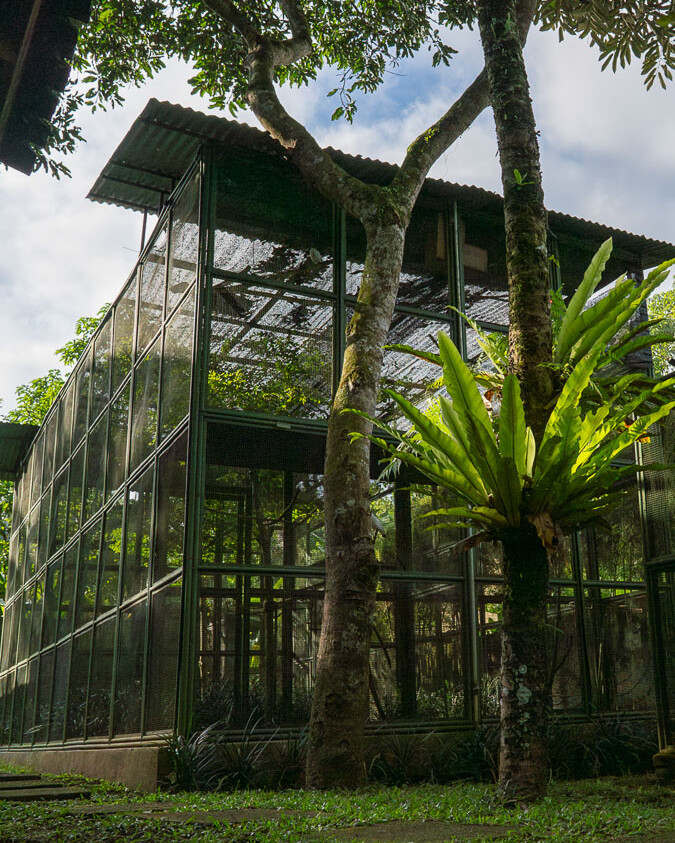
The largest enclosure at Begawan Gita was the socialisation enclosure, where birdkeepers observed possible pairings between adult Bali Starlings. Socialisation was carefully monitored, as Bali Starlings are naturally aggressive birds and can attack smaller or weaker individuals. Birds that paired were moved to one of nine breeding enclosures, which were partially screened to provide privacy and minimise disturbances during mating and brooding periods.
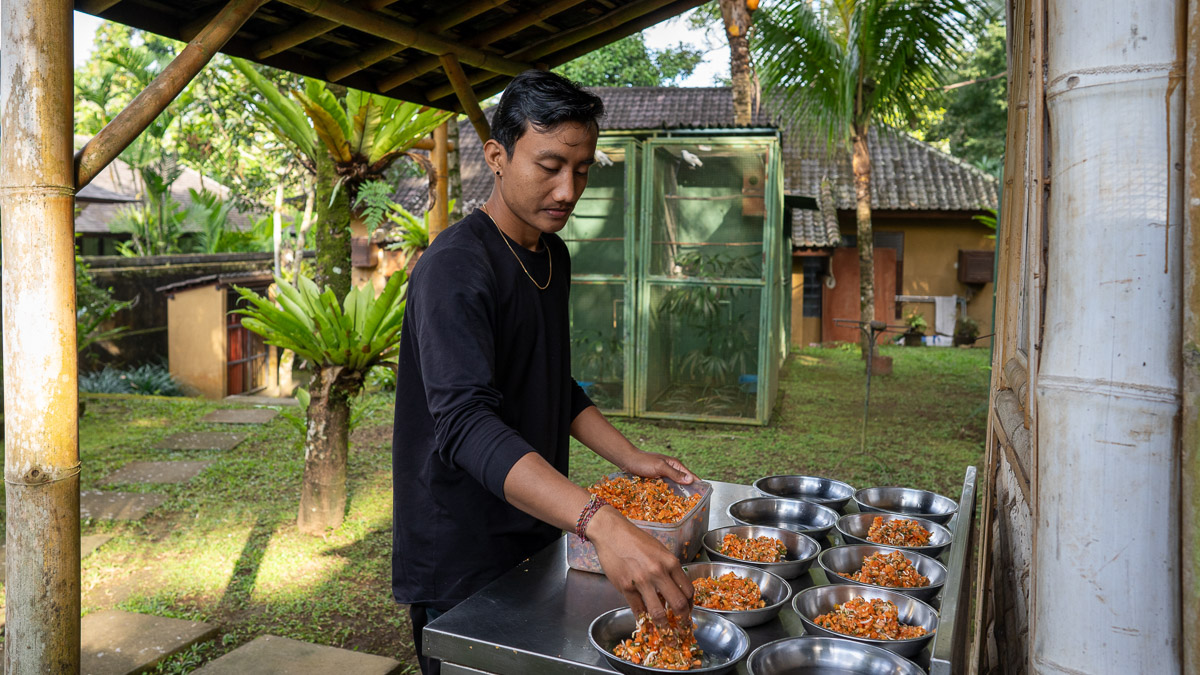
Begawan’s team fed the Bali Starlings twice daily, at 8am and 3pm. Meals consisted of papaya, carrot, sprouts, and long beans, with added protein from crickets, mealworms, or ant eggs. Birds that were mating and rearing chicks received additional protein to support their strength, while baby Bali Starlings requiring special care were handfed every few hours during their first weeks after hatching.
In addition to Bali Starlings, Begawan’s team cared for both Mitchell’s and Forsten’s Lorikeets and their offspring, as well as Black Wing Starlings.
Pre- and post-release care
Each year, Begawan Gita aimed to release a number of Bali Starlings into selected release sites. The Foundation conducted in-depth assessments of potential release areas, checking for natural predators and disturbances. Sites were surveyed to ensure they provided sufficient food, water, and nesting resources for the birds to thrive.
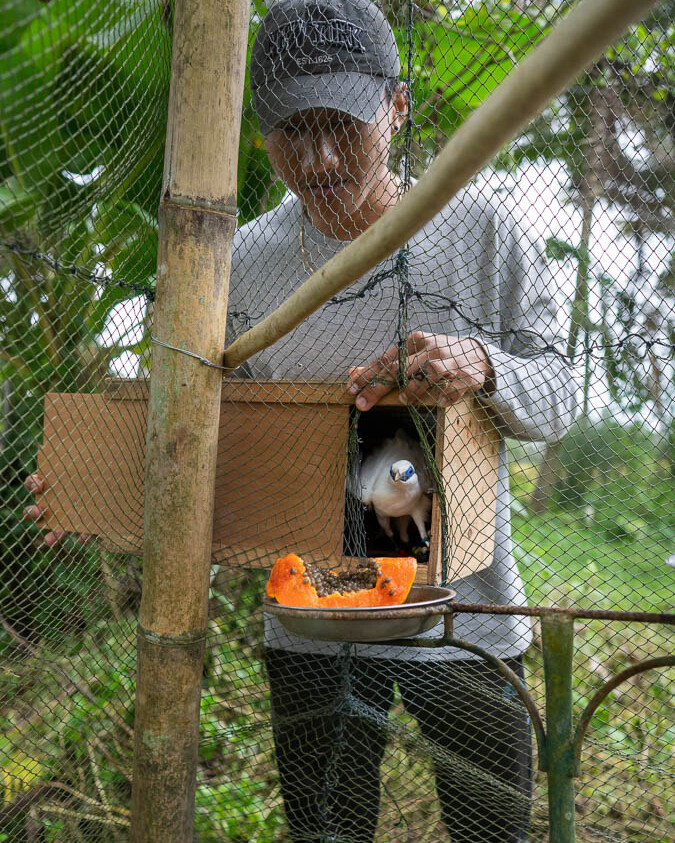
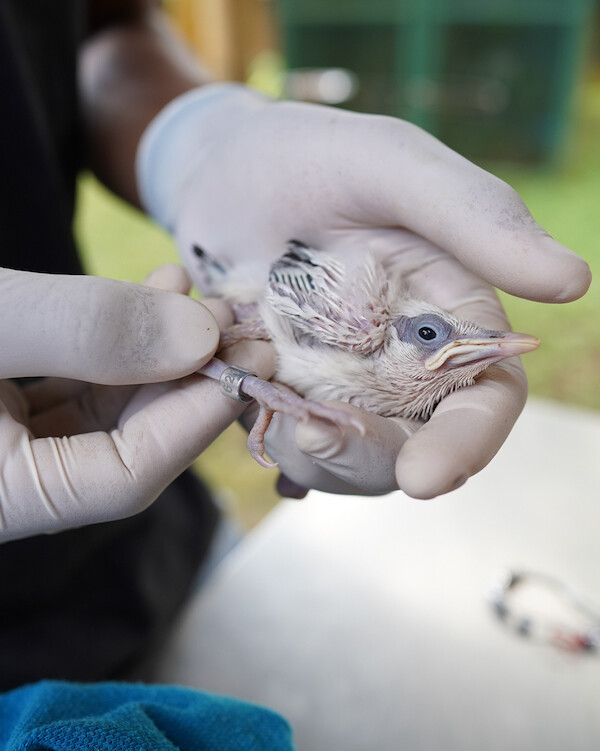
Long before any pairs were released, the conservation team tagged newly hatched Bali Starlings with metal rings around their legs. These metal rings allowed the birdkeeper to identify each bird and be able to tell the birds reared in the Centre apart from those born in the wild. The rings were slipped over the birds’ claws at about 10 days old, and the ID number was recorded in the program’s studbook. All births and deaths have been reported to BKSDA (Natural Resource Conservation Centre). Birds chosen for release were also microchipped under the skin, using chips purchased from Trovan Microchips Australia, to enable the Begawan Gita team to track them if they were poached.
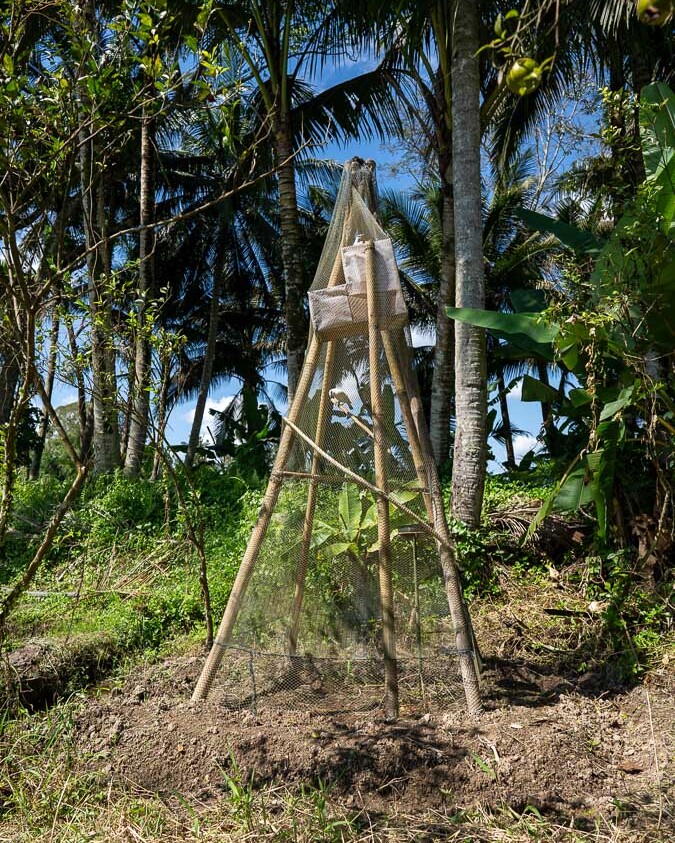
For one month after release, Begawan’s birdkeeper monitored the birds twice a day. The birdkeeper put out food in the early days after release until the pair was able to find its own food sources. When a pair of Bali Starlings showed an inclination to a particular area, the birdkeeper looked for natural holes where the birds would be able to nest. If there were none, the birdkeeper installed a plywood nestbox, with a metal protector on the pole to prevent climbing predators from reaching the nest. After a month had passed, the birds were checked weekly, and any new Bali Starlings born in the wild would be carefully monitored by the team.
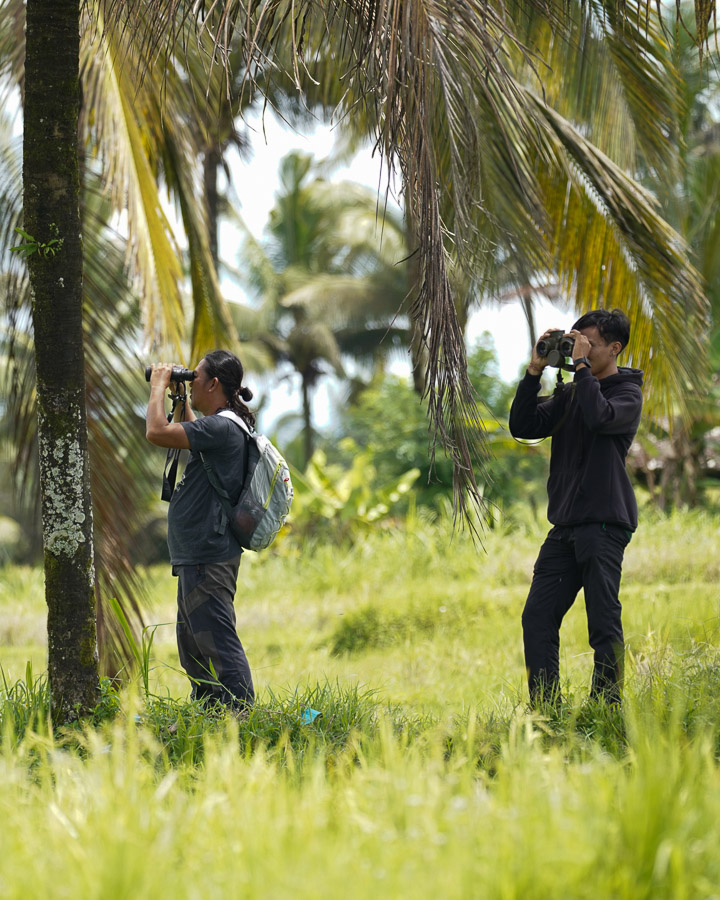
Begawan Biji’s conservation team now maintains strong connections with local communities near release sites. Their support is essential in tracking the birds’ movements, and villagers were often the first to notify the team of any incidents affecting the birds’ wellbeing. Data is still recorded with information being conveyed to the tour leader who knows where released Bali Starlings may be seen.
Education for communities
Beyond breeding and releasing Bali Starlings, Begawan actively raised awareness of the importance of conservation among Bali’s residents and visitors. The Foundation developed a 10-week conservation course centred on the Bali Starling. Each week, the Begawan team spent one hour with students, teaching environmental preservation and empathy for animals through hands-on activities. The programme reached 2,500 students across 50 classes in 25 schools, inspiring young people to value conservation. Begawan Foundation also held community workshops in villages where Bali Starlings were released, educating more than 300 people about the species’ plight and gaining local support for protecting the birds. Begawan hosted many school trips and educational visits, highlighting the importance of conservation for future generations.
Begawan’s long-standing efforts to protect the Bali Starling were recognised in 2015 by the Tri Hita Karana Nugraha awarding committee, which honours outstanding organisations working to strengthen Balinese values and society.
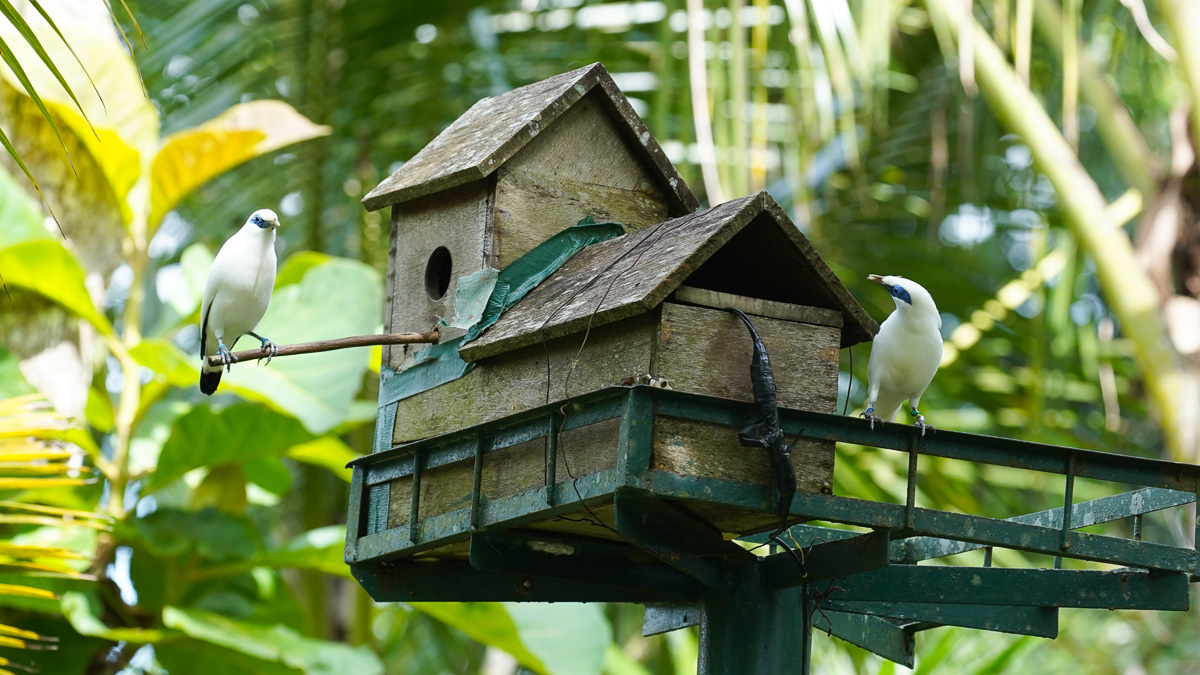
In 2022, Begawan launched tours of its breeding centre and release site for visitors of all ages. These guided experiences shared the story of the Bali Starling with audiences from around the world.
Tour visitors and restaurant guests may now see released Bali Starlings at Begawan Biji, in Bayad, where several Bali Starlings have been released. These pairs have nested, bred offspring and taken up residence in the fields around the restaurant. Both pairs and groups may be seen at a variety of nearby sites – Banjar Begawan, Banjar Tibekauh, Banjar Bayad, and Banjar Paneca in Melinggih Kelod and near the town of Payangan.
185 birds released
Into the wild between 1999 and 2024
6 banjar
Enforce fines for hunting and poaching
300 attendees
In village conservation workshops

Building Begawan Giri farm in Bayad, Bali
Building Begawan Biji farm in Bayad, Bali
At the end of a quiet road just 20 minutes from Ubud
waits one of the most beautiful farms in Bali.
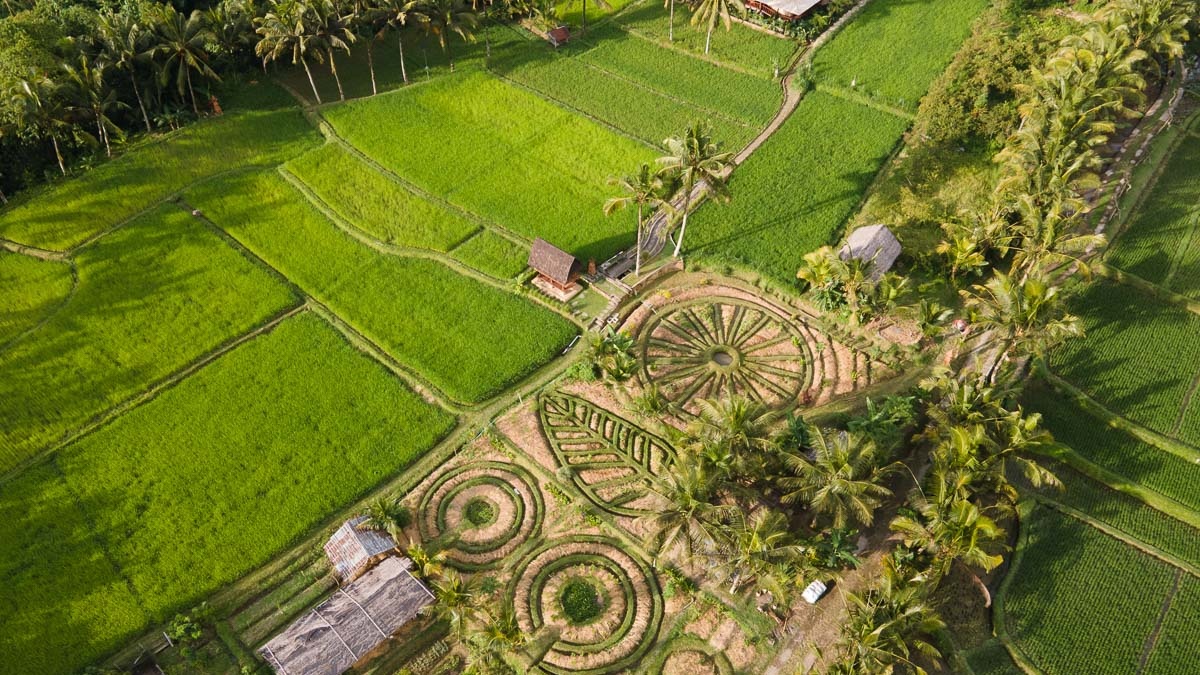
Part of the land is molded into mandala-shaped garden beds, fringed by edible flowers, mulberry trees, and sorghum. A traditional lumbung, or Balinese granary, stands proudly on wooden stilts. A long poultry house faces the regenerative farm beds, and neatly planted rice fields lead the eye towards rows of waving banana trees and coconut palms.
Begawan Giri began in 2022 (and has since, transitioned to Begawan Biji farm since 2026), with just one farmer on a 0.44-hectare plot of land in Bayad Village. Begawan, a foundation that’s led initiatives in conservation and education in Bali for more than 20 years, decided to explore solutions to Bali’s pressing agricultural concerns: environmental degradation, land loss, and low incomes for farmers.
Begawan launched its regenerative farming initiative with the goal to support local farmers to transition to chemical-free farming. To do this, the organisation provided training in regenerative practices, supplied materials such as organic seeds and natural fertilizers, and created a business model that guaranteed farmers higher profits from their harvests.
Begawan chose to plant Mansur, a brown rice that was one of many heritage varieties cultivated in Bali before the monoculture of hybrid rice begun during the Green Revolution. Seeds were purchased from an organic farmer in Tabanan, and 22 tonnes of compost were used to enrich the soil before the first planting season.
Aware of the high methane output and water consumption in conventional flooded fields, Begawan chose to use intermittent flooding for its rice paddies, significantly reducing water use as well as methane emissions. Dr. Stephen Lansing, an ecological anthropologist, studied the methane output of Begawan’s fields, and reported his findings at COP28 in Dubai in 2022.
Begawan’s founders reached out to hotels and resorts in Bali with news of the small farm growing a delicious, nutty wholegrain using only natural farming methods. After a four-and-a-half month growing cycle, 966 kilos of Mansur rice were harvested.
Several more farmers decided to join the program.
Later in 2022, Begawan hired a permaculturist to survey a .50-hectare plot to gauge its potential as a permaculture garden. The land was divided up with space for a plant nursery and composting house for rice straw from the fields. The garden beds were created in a Mandala-style circular design, with water in the central ring for irrigation and aquaculture.
In August of 2023, Begawan constructed an underground natural water filter, the largest of its kind in Bali. Measuring 20 metres long, 2.5 metres wide, and 1.5 metres deep, the filter used three tanks and a system of plants, volcanic rock, and gravel to purify the water from the public irrigation system of large particles and heavy chemicals.
Begawan consulted professionals about the building of a poultry house, and constructed spacious quarters to accommodate free-range ducks, ISA Browns known for their egg laying production and village kampong chickens. The organisation also built its own rice mill with a mechanical dryer and milling machinery, to process the Mansur rice in a chemical-free facility.
Today a number of farmers are growing Mansur Rice naturally on rice fields surrounding Begawan Biji. The farmers are trained in natural regenerative farming practices, and each farmer is guaranteed a premium price for the rice, well above market rates. Begawan also provides jobs to men and women from Melinggih Kelod, who help with labour on the farm.
Begawan Biji farm in Bayad has become a model for visitors and students from around the world.
Restoring biodiversity on Begawan Biji farm
Restoring biodiversity on
Begawan Biji farm
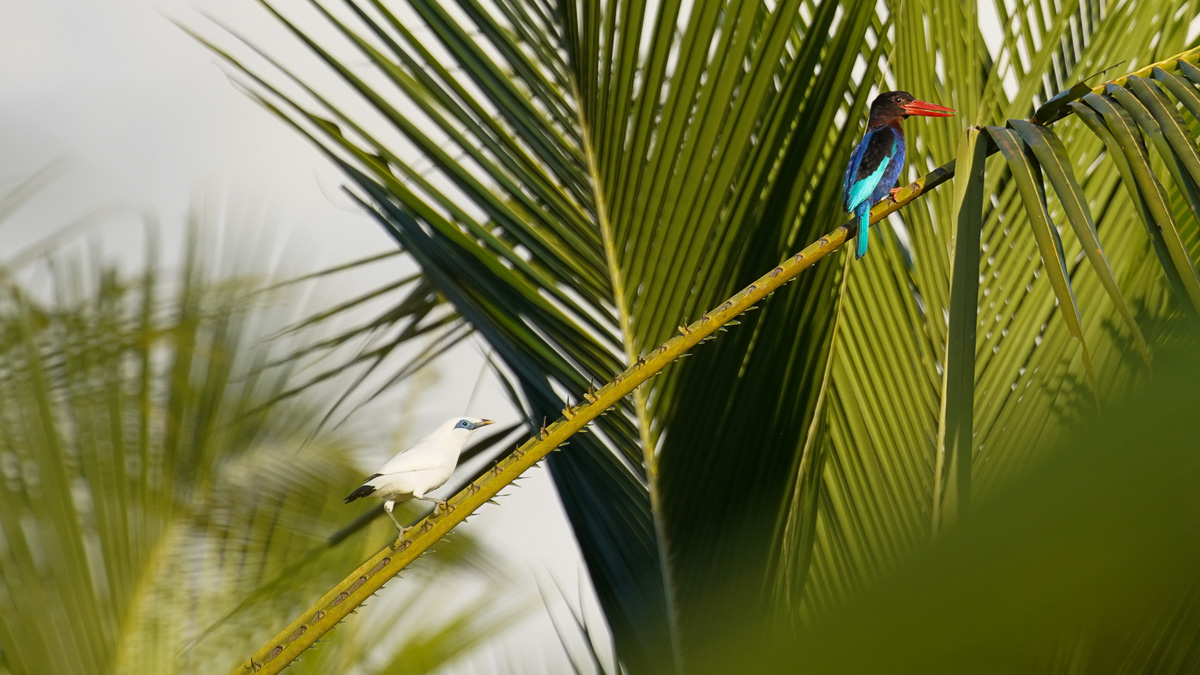
Begawan’s regenerative farm in Bayad Village is one of the few places in Bali where visitors can see the critically endangered Bali Starling flying freely in the wild. A small flock of Bali Starlings have made their nests near Begawan’s rice fields and permaculture gardens.
Visitors joining our Begawan Biji Experiences day tours, and guests of Begawan Biji restaurant can spot the pairs flying to their favourite watering sites, perching and dancing on palm tree fronds, and hunting insects in the orange groves.
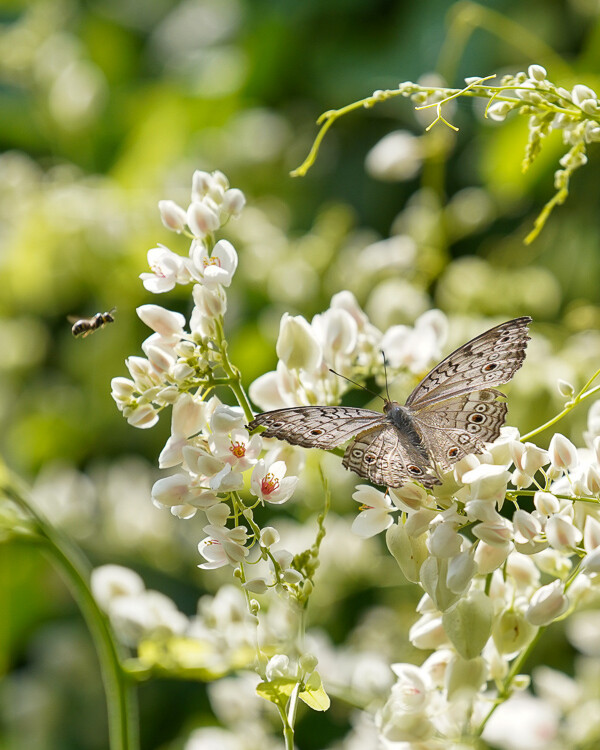
But Bali Starlings are not the only species guests can discover on Begawan Biji farm. Thanks to the regenerative practices followed by the farmers in the Begawan Biji program, several rice fields surrounding Begawan Biji Restaurant are free from agrochemicals which harm small creatures and wipe out food sources for larger animals.
Begawan Biji’s natural farming methods have created cleaner air, water, and soil for a wide array of wildlife.
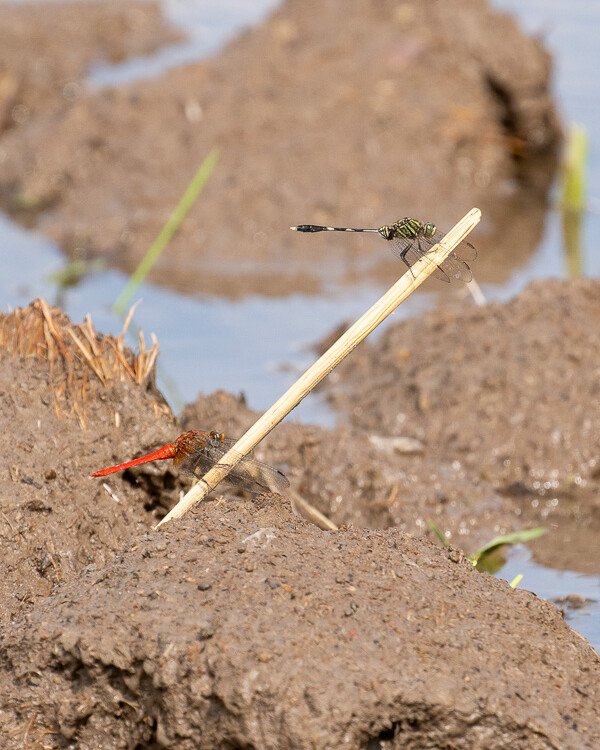
The farm’s natural water filter provides a source of pure water for irrigation, as well as for insects and animals that thrive near water, creating a stable food supply for a variety of beautiful creatures. Dragonflies, which lay their eggs in water, are considered a good indicator that water is clean and uncontaminated. Six species of dragonflies have been identified in Begawan’s rice fields. Their presence is a source of pride for the farmers.
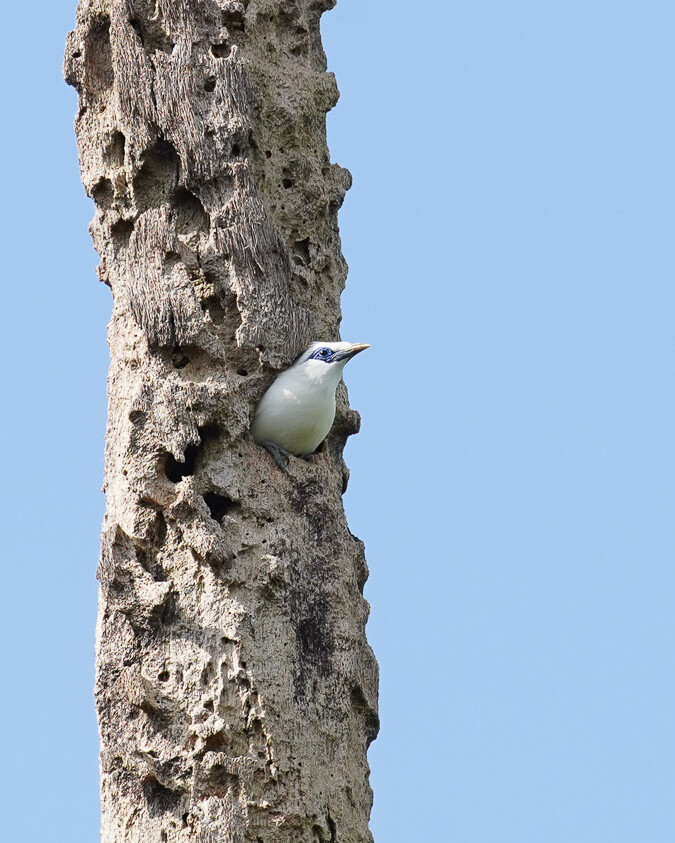
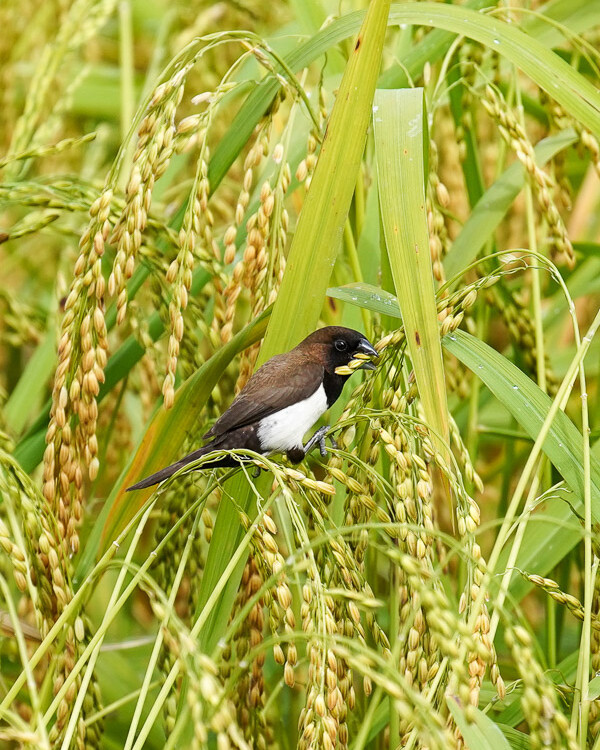
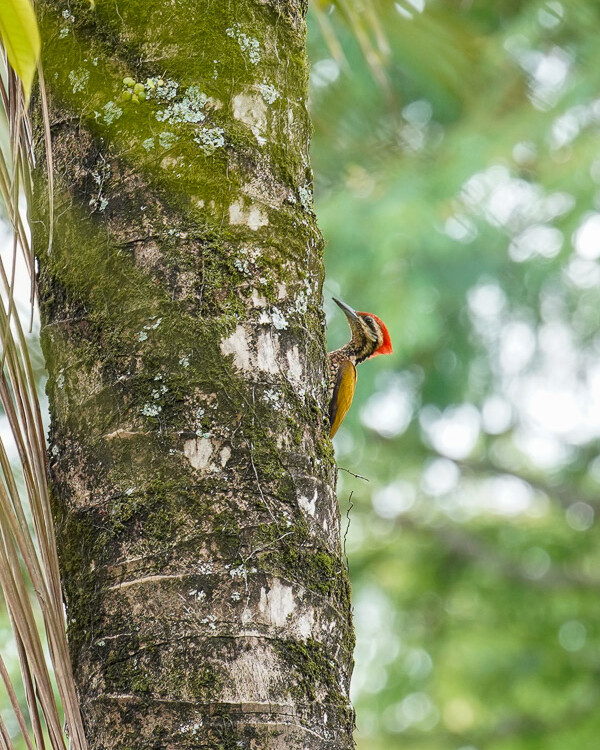
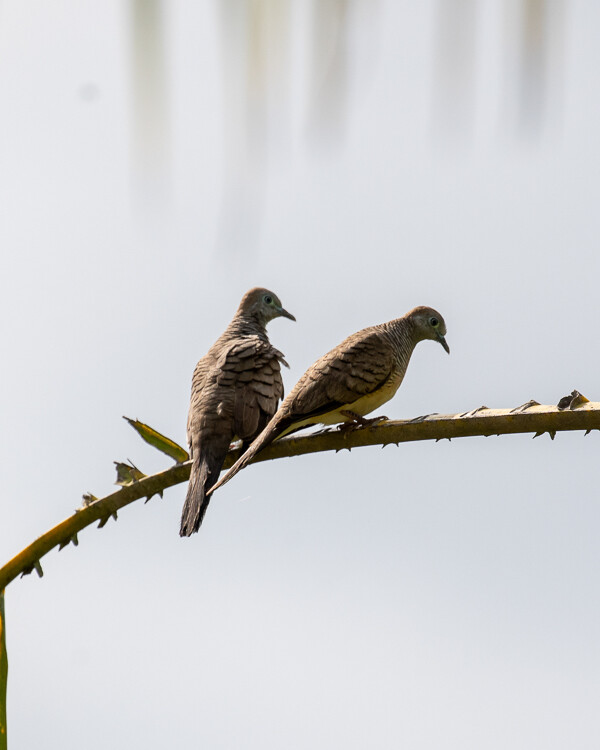
No fewer than 48 species of birds have been identified in Begawan’s rice fields and the area around the farm. The list includes Zitting Cisticola, Little Spiderhunter, and Flame-throated Bulbul, as well as birds such as the Java Munia, Wood Sandpiper, and Common Flameback. Woodpeckers, often spotted on the farm, feed on tiny insects which are easily killed by agrochemicals. The chemical-free foilage on Begawan’s farm is an inviting hunting ground for Woodpeckers. These birds are also crucial to our conservation program, as the holes left by Woodpeckers in coconut and other trees make ideal homes for newly released Bali Starlings.
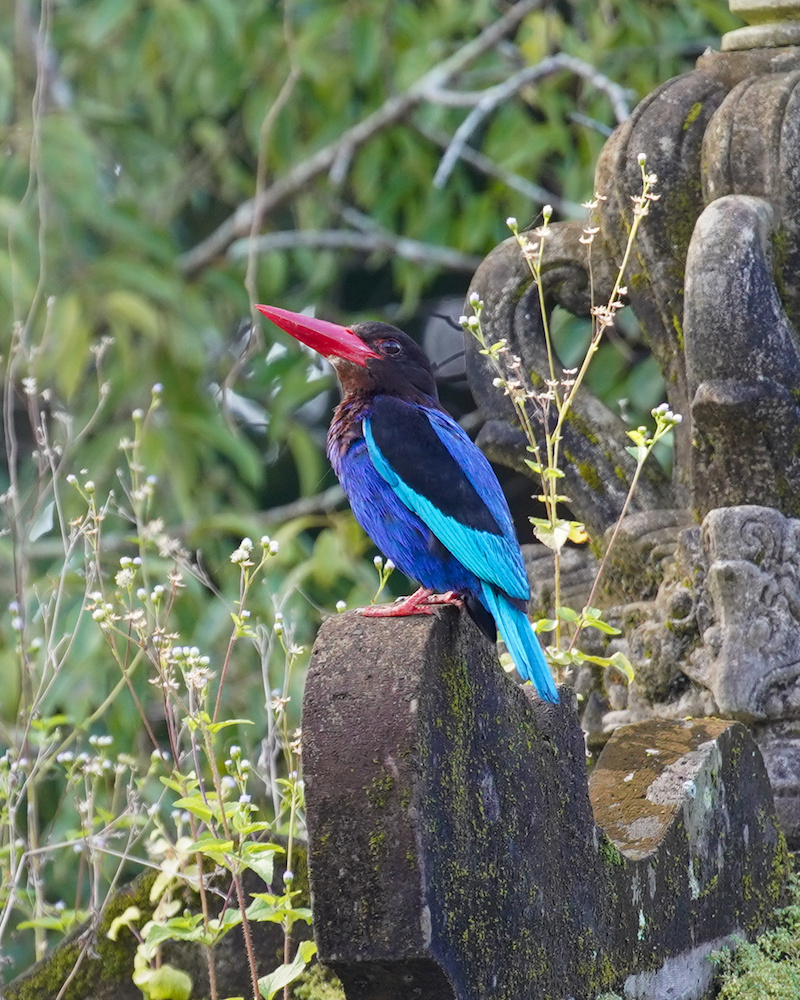
The Javan Kingfisher, a species endemic to Java and Bali, makes its home near rivers and ponds, where the bird hunts for the small fish that make up its diet. The run-off of chemical fertilisers into many of Bali’s waterways has contaminated the Kingfishers’ main source of food. However, the rivers and ponds around Begawan Biji’s farm are a favourite haven for Kingfishers. Striking blue with large red beaks, they can often been glimpsed flying over the pathways to the farm, and even hunting in the ponds in the permaculture garden.
The circular nature of regenerative farming means that as Begawan provides the local wildlife with a healthy habitat, these creatures also play their unique roles in balancing the ecosystem in the farm. Begawan’s integrated pest management system relies on healthy wildlife to work.
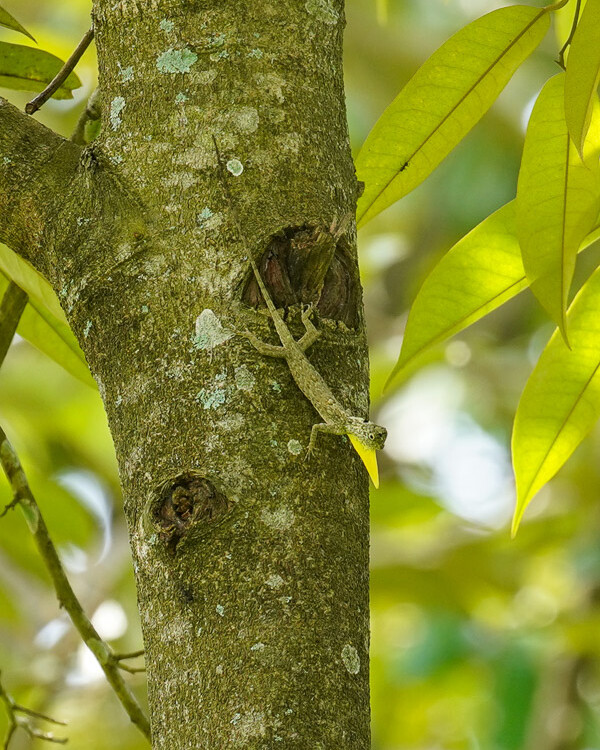
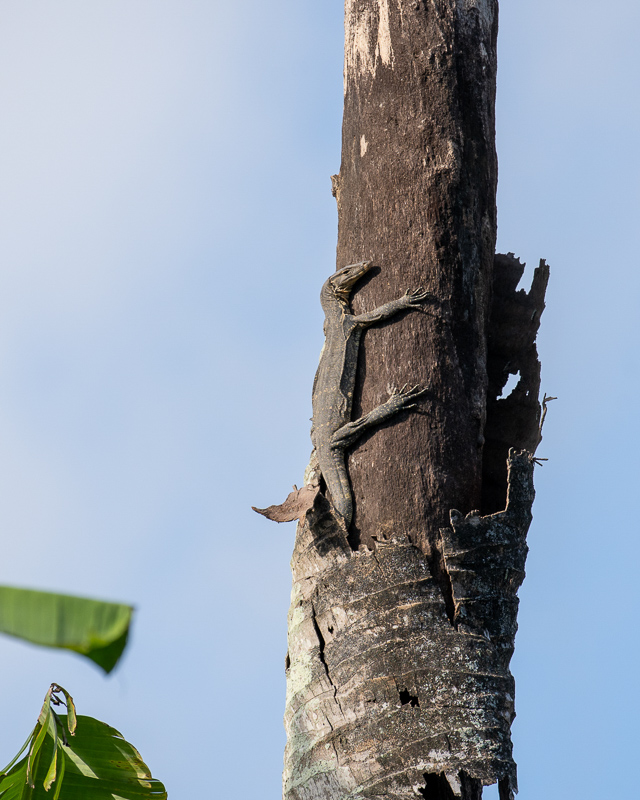
Begawan’s farm team sets up bamboo sticks on the edge of the rice fields for Pacific Swallows, who hunt pests on the ground. Sensitive baby eels, which can only thrive in clean soil and water, are breeding in Begawan’s rice fields. The adult eels will in turn eat crab eggs, which benefits the farm, as crabs burrow holes that drain the water in the rice fields. Flying Lizards have also been documented on the Begawan Biji farm. Considered a bioindicator for clean air, they too help to control pests in the rice fields.
Begawan’s approach to conservation recognises that to protect animals, we also need to protect the habitats where they live. To thrive in the wild, Bali Starlings require a healthy environment with clean air, water, and food. The chemical-free fields and gardens in Begawan’s program support not just the survival of Bali Starlings, but also a host of other species that are intricately connected to each other and to all of life on the island.